A first impression of Seoul can be quite intimidating. The drive in from the airport, under a hazy, polluted sky, weaves through brown, undulating hills congested with concrete apartment buildings, factories, Buddhist temples, communications towers and gigantic shopping malls. The 10-story LCD screens on the sides of office buildings send flickering images of advertisements and music videos over the city, their vibrant colors pouring down on the streets. From my vantage point in the back seat of an airport car, the dashboard looks like the control panel of a 747, with toggle switches, computer screens and green and blue dials. The radio speaker has such an authentic sound, Placido Domingo could be right there, singing Otello in the front seat.
High-tech and frenetic Seoul takes some getting used to. The city itself has more than 10 million people, with more than 23 million in the metropolitan area. Residential streets, walking paths, mini-forests and scattered cemetery plots climb up Seoul’s many steep hills. Wide expressways cut through the city at strange angles; narrow lanes meander through quiet tree-lined neighborhoods where hanok houses, traditional wood buildings with tiled or thatched roofs, still stand. High-speed rail and subway trains zip in and out of urban tunnels and along bridges that cross the Han River, a major Korean waterway once so strategic that armies went to war to control its banks. These days, it’s just a place to cross when commuting to work, dividing neighborhoods and postal codes, a still-polluted river that Seoul aims to clean up when money and time become available.
People are everywhere — shopping, working, pushing food carts, streaming in and out of subway stations. Clumps of teenagers prowl the sprawling indoor COEX mall, dressed outlandishly: Girls’ pony-tails swing wildly as they race through the underground shopping corridors, eating, talking and texting all at the same time. Speed is important to these kids. A 16-year-old Seoul student, Ha Mok-min, won the 2009 South Korean national texting championship against 2.8 million competitors by thumbing 7.25 characters a second; her Team Korea won a recent international competition in New York.
Speed is important to older Seoul residents as well. Non-Korean business executives, in the city for a few days, find themselves taking public transport for the first time in their lives. It is fast and inexpensive (80 cents per ride), and since it takes three hours to cross Seoul by car, local workers don’t waste time sitting in traffic. For business appointments outside the city, Korea Rail’s high-speed KTX trains offer frequent departures from Seoul Station, hitting 210 mph as they rocket south toward Daejeon and Busan, into South Korea’s industrial heartland. Packed with impatient commuters looking at their watches, the trains hurtle through the gritty landscape of suburban factories.
South Korea had one of the fastest-growing economies in the world from the early 1960s; and although the current economic slump has slowed the pace slightly, creating inflation and dampening consumer spending, the country continues to excel in almost every economic category: 13th-largest economy in the world, the world’s largest shipbuilder, dominant in the global construction industry, ranked first in the 2009 Global Innovative Index, ranked sixth-most economically powerful city by Forbes. Although last year was a difficult one for many South Korean companies, with President Lee Myung-bak cutting government costs and working with manufacturers to weather the decrease in orders from its major trading partners, many larger corporations saw profits increase in the last quarter of 2009, including Hyundai, where net profit quadrupled to $820 million. Other Seoul-based companies, including Samsung Electronics, LG Electronics, Shinhan Financial Group and Korea Electric, also had profit gains as the Korean economy rebounded.
South Korea expects a 20 percent increase in business and leisure visitors in 2010, for a total of 120 million. Part of the growth will stem from a 40 percent upswing in medical tourism — to more than 70,000 visitors seeking medical treatment in Seoul and other cities — and from the government’s reassurance that Seoul is a business-friendly city for overseas investors. The U.S. company, Qualcomm, will set up a technology research and development center near Seoul and invest in the Seoul-based audio chip maker PULSUS Technologies as part of South Korea’s government-led investment program.
South Korea is in a perpetual cold war with North Korea. Athough border flare-ups and tough political talk make headlines, the rhetoric rarely has a long-lasting effect on Seoul’s economy or lifestyle. Still, most South Koreans would like to see a breakthrough in the half-century standoff between Seoul and Pyongyang.
In November 2010, Seoul will host the G-20 summit, bringing world leaders to a city that is pushing forward with ambitious, multibillion-dollar urban development projects. To help jump-start a Universal-themed resort in Hwaseong, a suburban location near Incheon, Korean investors are finalizing a $3 billion plan with the American firm Universal Parks & Resorts; construction is scheduled to begin in 2011, with an opening in 2014. Seoul continues to expand vertically, with a number of corporate towers scheduled to be completed in the next several years. The 130-story International Business Center will be located in the futuristic Digital Media City, a major development project in northwest Seoul that will be completed in 2015.
Diversions
Seoul was designated the 2010 World Design Capital by the International Council of Societies of Industrial Design, and this year the city is showcasing its many architectural and design elements. Traditional Korean architecture can be seen at Seoul’s rebuilt 19th-century Royal Palace, Gyeongbokgung (1 Sejong-ro, Jongno-gu, tel 82 2 723 4283), and at Changdeokgung (110–360 Yulgok-ro, 99 Jongro-gu, tel 82 2 762 8261), a 15th-century ancient palace and World Heritage site. Guided tours of this incredible building include the Secret Garden, where trees and fresh air make for a nice urban break. Bukchon Hanok Village (105 Gye-dong, Jongno-gu, tel 82 2 3707 8388) is an old residential neighborhood where many of the traditional hanok houses are being restored.
For a taste of Seoul’s newer design, visit the strangely beautiful Seoul Museum of Art (30 Misulgwan-gil, Jung-gu, tel 82 2 2124 8800) and its exhibits of ancient and modern Korean art. The 1,080-foot N’Seoul Tower (Namsan Mountain, tel 82 2 3455 9200 ) has great views, especially from the N’Grill revolving restaurant, two decks above the observatory. Use the cable car to reach the tower.
In conjunction with World Design Capital initiatives, noted architect Zaha Hadid accepted a commission to design Dongdaemun Plaza & Park, which will hold a design museum, library and educational facilities, all under a grass-covered roof, providing an urban oasis in downtown Seoul.
Half- and full-day bus tours from Seoul to the Demilitarized Military Zonee at the border with North Korea are quite popular and are available from several tour operators; reservations are required. Contact the International Cultural Service Club (tel 82 2 399 2698).
Even if your hotel bath is the size of a swimming pool, a visit to Dongbang Sauna (near Hongik University metro stop, tel 82 2 332 0481) or Hurest Spa (31-1 Myeongdong Tower, Myeong-dong 2-ga, tel 82 2 778 8307), with their hot and cold tubs, fitness centers, sauna and jjimjilbang (relaxation rooms) will leave you feeling invigorated and euphoric. The public baths are receptive to foreign travelers and inexpensive, with separate facilities for men and women. It’s a unique Korean experience that will prepare your mind and body for the long business dinner — and the night of karaoke that may follow.
Info To Go
Incheon International Airport (ICN), 32 miles from Seoul, is connected to downtown by airport bus routes ($12, 60–120 minutes). Taxi fares ($38–77, 60–75 minutes) do not include road toll and night premium fee. The new airport rail line is expected to be completed in late 2010. Visit http://english.visitseoul.net.
Lodging
Millennium Seoul Hilton
Located just outside the city center near Mount Namsam, with spacious rooms, health club, golf driving range, seven restaurants and large heated pool. 395, 5-ga, Namdaemun-ro, Chung-gu, tel 82 2 317 3114, $$$
Park Hyatt Seoul
This modern, glass skyscraper in business and financial center, close to Convention Center, has indoor pool and spa, stunning views, good dining options. 995-14 Daechi 3-dong, Gangnam-du, tel 82 2 2016 1234, $$$$
W Hotel Seoul – Walkerhill
Elevated location 15 minutes from business district, with superb views of city and river, with 252 beautifully designed guestrooms, excellent spa and restaurants. 21 Gwangjang Dong, tel 82 2 465 2222, $$$$
Dining
Hanilkwan
Serving traditional Korean specialties since 1939, including spicy yellow codfish, mung bean jelly, seafood pancakes, dumplings. Private rooms available. 619-4 Sinsa-dong, Gangnam-gu, tel 82 2 1577 9963, $$
Sanchon
The place to go with colleagues, in an eclectic neighborhood; serves traditional, vegetarian, Buddhist temple food. Fan and drum dances at night. 14 Gwanhun-dong, Jongno-gu, Insadong, tel 82 2 735 0312 $$$
Tosokchon
Large, popular restaurant, famous for samgyetang (chicken ginseng soup) and delicious green onion pancakes. 85-1 Chebu-dong, Jongro-gu, tel 82 2 737 7444 $$
Read This Next
All Reads on This Topic
Read Them All
Introducing
FX Excursions
FX Excursions offers the chance for once-in-a-lifetime experiences in destinations around the world.
#globility
Insta FeedMelt into Mediterranean Charm in Barcelona and Costa Brava
Usually regarded for its Modernist architecture, centuries of artistic influence and polarizing football team, Barcelona has come into its own as a growing tech hub. The capital of Catalonia hosts the annual Mobile World Congress each March, and its Poble Nou neighborhood cradles some of the world’s most recognizable startups like TravelPerk and Typeform.
Sponsored Content
Global Traveler Hosted Trip on the Transcend Connect
JOIN GLOBAL TRAVELER ON ITS NEXT TRIP!
Daily
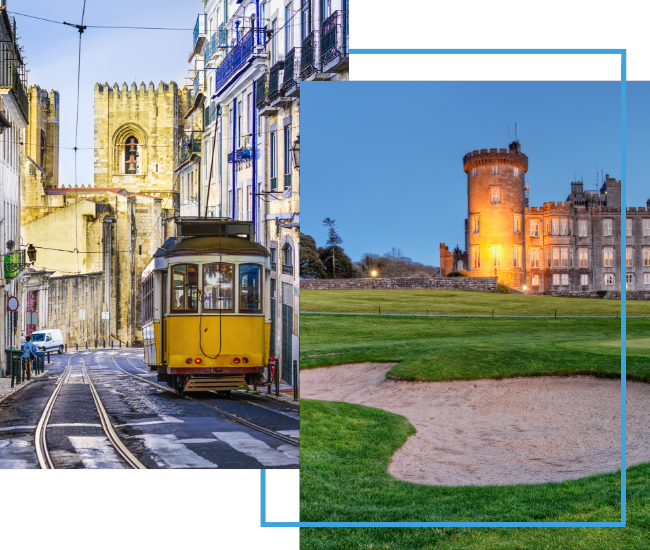
Sep 21, 2026Ireland’s Dromoland Castle Announces Landmark Transformation
This November, Dromoland Castle is set to close its doors for six months for its largest redevelopment in its 63 years as a hotel. Set to reopen in June 2027, the 16th-century property in County Clare will debut a one-of-a-kind transformation with updates to accommodations, public spaces, wellness facilities, culinary features and more.
Destinations
Sep 21, 20266 Reasons to Put Addis Ababa, Ethiopia, on Your Travel List
It’s time to start dreaming of your next trip. Here’s some destination inspiration for you. Take a visual journey through Addis Ababa, Ethiopia, with us.
Sponsored Content
The World Awaits with Turkish Airlines’ Global Access
Turkish Airlines enjoys the unique position as the airline flying to more countries than any other airline. Its unrivaled global reach is only the beginning of the experience that awaits passengers with Turkish Airlines.
Daily
Sep 21, 2026Women’s Retreats Now Available at Six Senses Kyoto, Six Senses Kanuhura
Designed to be a supportive experience for women of all ages, The Yin Way Retreat — The Way of a Woman is a new experience available to guests this year at Six Senses Kanuhura in the Maldives. It’s available Oct. 1 to 4 in the Maldives, and at Six Senses Kyoto in Japan Dec. 11 to 14.
Seven Seas Prestige to Feature New Spaces
September 2026
Sep 19, 2026Daily
Sep 18, 2026Windstar Unlocks Tower of London After Dark and Other New 2027 Experiences
Explore three different remarkable European destinations in 2027 with Windstar Cruises. The brand’s newest 224-guest, all-suite yacht, Star Explorer, debuts alongside complimentary Destination Discovery Events in Livorno, Dubrovnik and London.
Sponsored Content
IHG Business Edge: A Smarter Way for Small- and Mid-Sized Businesses to Travel
IHG Business Edge is a complimentary travel program designed to help small- and mid-sized businesses manage travel more efficiently while saving on hotel stays. Members enjoy access to guaranteed discounts, loyalty benefits, and partner offers across IHG Hotels & Resorts’ global portfolio of 7,000-plus hotels in more than 100 countries.
September 2026
Sep 17, 2026High-Spirited Hong Kong: The Dynamic Hub Embraces Its Maritime History and Culture
It was known as the “Kai Tak heart attack” — the thrilling, terrifying final approach into Hong Kong’s Kai Tak Airport. Airliners were required to bank sharply at the last moment, dodging hills and apartment blocks to line up with a runway jutting out into Kowloon Bay. The airport is long gone, but international visitors are arriving at Kai Tak again, albeit more sedately. Their cruise ships dock smoothly at Kai Tak Cruise Terminal, a modern gateway designed by Sir Norman Foster.
ShareThis