I’m simply not sure where to look first. Staring upward at the Sagrada Família’s fantastical façade, I have an odd sensation of tilting — a feeling that I’ve tripped and tumbled down a rabbit hole, or that the rules of gravity changed without anyone bothering to tell me. Sensing an impending lurch, my husband, James, takes my elbow and steers me onto the sidewalk.
Antoni Gaudí has that effect on me. Gazing upon the lacy stonework pinnacles of his seminal — and still unfinished — masterwork, I can’t help but wonder what the Romans, who founded this city as a military camp, would think, given they weren’t shy about leaving behind their own distinctly decorative stamp. A colorful visual feast of sculpted saints, geometric forms that begin as one shape and morph into another, and a forest of spires, the design of the enormous basilica contains oddly contrasting elements: angular bones and figures of tortoises trapped beneath the base of soaring columns, and an elegant and serene interior space.
James, a student of architectural design, considers his answer when I voice my thought. “Perhaps,” he offers, “it’s all very beautiful and undeniably interesting — but what purpose does it fulfill?”
Design is blissfully inescapable in Barcelona, the only city ever awarded the Royal Institute of British Architects’ Royal Gold Medal for architecture since the prize’s inception back in 1848. With eight UNESCO World Heritage sites, economic stability, fabulous weather and world-class dining, it consistently ranks as one of the most popular destination cities in Europe — a mod metropolis straddling the Mediterranean along the Iberian Peninsula, with miles of groomed beaches and a deep harbor often filled with enormous cruise ships.
Here on a design pilgrimage, and in the mood for a walk in the sunshine, we make our way to La Rambla, a popular pedestrian boulevard that runs along the perimeter of the old Gothic Quarter, the Barri Gotic. Three-quarters of a mile long and built atop the remains of the original Roman city, it stretches from the waterfront to busy Plaça de Catalunya. Its tree-lined length overflows with quirky shops, lovely cafés, performance artists, musicians, floral stalls and charming plazas. The Font de Canaletes, the city’s most famous fountain and default meeting point for locals, is also located here. Though a local legend says that anyone who drinks from its waters is guaranteed to return to this city, we decide to quench our thirst with a short break for tapas and cavas, the Catalan variety of sparkling wine, at Cafè de L’Òpera. A city institution, long a popular place for locals to congregate after the curtains closed so the merits of that evening’s featured baritone could be discussed, it still retains a sense of elegance and grace suggestive of a distant era.
Towering above the Barri Gotic is the city’s historic Cathedral of Santa Eulalia —complete with a resident gaggle of white geese. The geese reside in an interior, pooled courtyard aptly called the Fountain of the Geese and are said to be descendents of geese originally kept by Roman soldiers to act as sentinels, making a strident ruckus whenever intruders or would-be marauders approached.
We head a few streets away to the Passeig de Gràcia, the location of two residential structures designed by Gaudí. Fish-scale roofline and masked, skull-like balconies front Casa Batlló, commissioned by Spanish aristocrat Josep Batlló, and give the building the appearance of watching the crowds below, instead of the other way around. Not far away is La Pedrera, also known as Casa Milà. The roof of this building is the area that fascinates us the most, with ventilation towers fashioned to resemble swaying, armored figures and chimneys that stand like small groups of otherworldly beings. As with Gaudí’s other works, the complex decorative elements take both Gothic and Art Nouveau styles to new limits.
Gaudí, of course, hasn’t been the only architect to leave his mark on Barcelona, and our exploration leads us toward the waterfront. Here, the gigantic glinting copper fish sculpture known as Peix, designed by Frank O. Gehry for the 1992 Summer Olympics, rests at Port Olimpic, facing the sea but forever trapped ashore. We stroll the waterfront, heading for the cable car. Walking — punctuated with rides on the straightforward Metro system — is unquestionably the best way to soak in Barcelona’s multitude of charms, but an aerial view is irresistible. At Sant Sebastia Station close to Barceloneta Beach, we catch the car and glide across the bay, heading to the top of the rocky hill known as Montjuic and its old fortress, the Castell de Montjuic. Constructed in 1640 during the war between Spain’s King Felipe IV and Catalonia, it later gained infamy as Franco’s depository for political prisoners. For the journey back, we take a different cable line, pausing halfway down to wander out onto the observation deck at Mirador del Alcalde.
The next day after breakfast, we take a leisurely walk through the orderly streets to the Parc de la Ciutadella, one of the city’s earliest dedicated green areas, and on to the plaza at the Arc de Triomf to admire the friezes festooned with lovely angels. From here, our destination is the Palau de la Música Catalana, designed by Lluis Domènech i Montaner, a contemporary of Gaudí who served as the director of Barcelona’s school of architecture, the Escola d’Arquitectura. James is interested in comparing Montaner’s interpretation of the Catalan Modernista style with Gaudí’s work. As we tour the ornately decorated spaces and breathtaking stained-glass concert hall, James explains the financial patronage that so often kept artists and designers within certain boundaries of cultural acceptability is more apparent here, and that while the classical elements that lend so much beauty to the building reflect the curved and sensuous lines that help define the style, it lacks the sense of independent creativity marking Gaudí’s works.
Bearing that in mind, we descend upon the last design address on our list, Park Güell. The park was originally intended to be the site of an upscale housing development, meant to make use of a dismal, rocky hillside that earned the name Bare Mountain. Here, Gaudí let his imagination and obsession with the natural world have free reign. I immediately fall in love with the giant birds’ nests integrated into the tree-like walls of the terrace and the colorful mosaic lizard fountain greeting us at the entrance, strategically positioned between tiled stairways. Gaudí himself lived here 20 years, and his former home is now a museum with displays including furniture he designed, models and architectural sketches. Though he didn’t design the house itself, it’s filled with details that were archetypes for his major projects, including Sagrada Família and Casa Batlló.
Gaudi’s work has been described as his personal expression of his devout Catholic faith, manifested in architecture and design. After spending a few days in this gorgeous city absorbing his exuberant and joy-filled creations, James and I fail to reach a consensus on a favorite structure. What we do agree on is that Barcelona is breathtaking — and beauty is always perfectly sufficient as its own reward.
Lodging
Hotel Claris Barcelona
Elegance and comfort dominate this centrally located boutique hotel with classic architecture, modern design elements and an impressive collection of ancient Egyptian art. Pau Claris 150 $$$–$$$$
Mandarin Oriental Barcelona
A worthy tribute to the City of Design, this stunning property also boasts a spa and excellent business facilities. Passeig de Gràcia 38-40 $$$$
Neri Hotel
Deep in the Gothic Quarter, this small design hotel’s 22 guestrooms are housed in two medieval buildings joined together above Roman ruins. Carrer de Sant Sever 5 $$$–$$$$
Dining
L’Arròs
For traditional paella, you can’t go wrong here. Try it with sea urchins, prawns and cockles; or fresh tuna, green garlic and peas. Passeig Joan de Borbó 12 $$–$$$
Café Emma
At this French bistro run by Michelin-starred chefs Romain Fornell and Michel Sarran, choose the garden terrace for people-watching or the dining room for quiet. Carrer de Pau Claris 142 $$–$$$
Fonda Gaig
Authentic Catalan cuisine, with an emphasis on seafood, is prepared with flair by Chef Carles Gaig. Closed Sunday evenings. Carrer de Còrsega 200 $$–$$$
Info to Go
Barcelona El Prat Airport (BCN) is about eight miles from city center, but traffic can be intense. A commuter rail station is located in Terminal 2; trains run every half hour with stops at main city stations, all offering transfers to the Metro. Aerobus service runs between the airport and Plaza de Catalunya (about $7). In the city, green trams (El Tram) are easy to use (about $2.60). Validate tickets at machines before boarding, as steep fines accompany noncompliance. A Barcelona Card provides unlimited use in Zone 1 along with discounts for select museums and shows.
Links
Read This Next
All Reads on This Topic
Read Them All
Introducing
FX Excursions
FX Excursions offers the chance for once-in-a-lifetime experiences in destinations around the world.
#globility
Insta FeedMelt into Mediterranean Charm in Barcelona and Costa Brava
Usually regarded for its Modernist architecture, centuries of artistic influence and polarizing football team, Barcelona has come into its own as a growing tech hub. The capital of Catalonia hosts the annual Mobile World Congress each March, and its Poble Nou neighborhood cradles some of the world’s most recognizable startups like TravelPerk and Typeform.
Sponsored Content
Get to Know TAP FORBIZ
Unlock flexible, refined business travel with TAP Air Portugal's program, TAP FORBIZ. Developed for small, medium and large Companies, with options for corporate events, TAP FORBIZ offers exclusive advantages adapted to each type of business. TAP FORBIZ offers solutions suited to each business: travel cost reduction, more flexibility, more benefits and more value. With TAP FORBIZ, businesses can centralize purchases, control the company budget and ensure greater cost predictability with exclusive discounts and benefits tailored to each company's profile. Each trip becomes a strategic decision to travel more and spend less.
Daily
Sep 21, 2026Ireland’s Dromoland Castle Announces Landmark Transformation
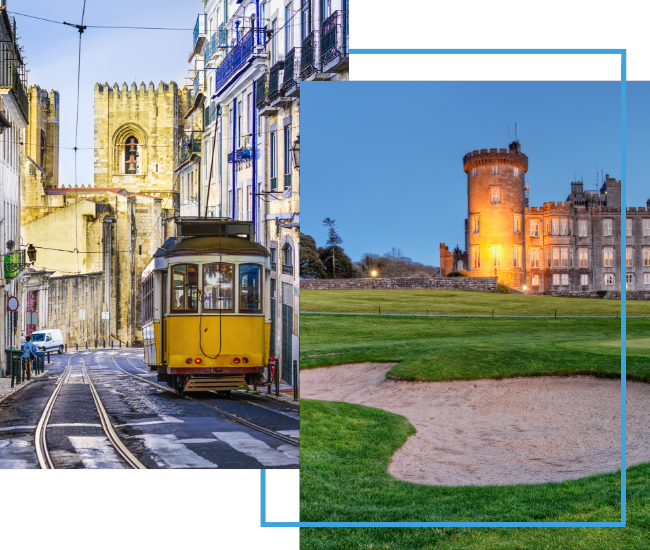
This November, Dromoland Castle is set to close its doors for six months for its largest redevelopment in its 63 years as a hotel. Set to reopen in June 2027, the 16th-century property in County Clare will debut a one-of-a-kind transformation with updates to accommodations, public spaces, wellness facilities, culinary features and more.
Destinations
Sep 21, 20266 Reasons to Put Addis Ababa, Ethiopia, on Your Travel List
It’s time to start dreaming of your next trip. Here’s some destination inspiration for you. Take a visual journey through Addis Ababa, Ethiopia, with us.
Sponsored Content
Why Japan Is Best Explored by Sea with Princess
Japan is a destination that rewards repeat visits because no two regions — or seasons — feel quite the same. One moment, you’re wandering through centuries-old geisha districts in Kanazawa. The next, you’re watching neon reflections dance across Tokyo streets long after midnight.
Daily
Sep 21, 2026Women’s Retreats Now Available at Six Senses Kyoto, Six Senses Kanuhura
Designed to be a supportive experience for women of all ages, The Yin Way Retreat — The Way of a Woman is a new experience available to guests this year at Six Senses Kanuhura in the Maldives. It’s available Oct. 1 to 4 in the Maldives, and at Six Senses Kyoto in Japan Dec. 11 to 14.
Seven Seas Prestige to Feature New Spaces
September 2026
Sep 19, 2026Daily
Sep 18, 2026Windstar Unlocks Tower of London After Dark and Other New 2027 Experiences
Explore three different remarkable European destinations in 2027 with Windstar Cruises. The brand’s newest 224-guest, all-suite yacht, Star Explorer, debuts alongside complimentary Destination Discovery Events in Livorno, Dubrovnik and London.
Sponsored Content
The World Awaits with Turkish Airlines’ Global Access
Turkish Airlines enjoys the unique position as the airline flying to more countries than any other airline. Its unrivaled global reach is only the beginning of the experience that awaits passengers with Turkish Airlines.
September 2026
Sep 17, 2026High-Spirited Hong Kong: The Dynamic Hub Embraces Its Maritime History and Culture
It was known as the “Kai Tak heart attack” — the thrilling, terrifying final approach into Hong Kong’s Kai Tak Airport. Airliners were required to bank sharply at the last moment, dodging hills and apartment blocks to line up with a runway jutting out into Kowloon Bay. The airport is long gone, but international visitors are arriving at Kai Tak again, albeit more sedately. Their cruise ships dock smoothly at Kai Tak Cruise Terminal, a modern gateway designed by Sir Norman Foster.
ShareThis