A young man in traditional, loose-fitting clothing and a straw hat arranges a cloth filter over a metal pitcher and carefully measures out the right number of scoops. He pours steaming water over the grounds as we look on with anticipation. When it has all flowed through, he pours the black liquid into mugs that warm our hands in the morning mountain mist. We take sips and smile, drinking coffee from the source that tastes nothing like what comes out of a pot at the local diner.
We’re finishing up a farm tour in Colombia, one of the world’s best-known coffee-producing countries and one whose top farms win tasting awards on an annual basis. A whole Coffee Triangle region comprises the cities of Armenia, Pereira and Manizales. There’s even an amusement park with entertainment in this area that’s dedicated to the world’s most popular beverage: Parque Nacional del Café.
© RECHITAN SORIN | DREAMSTIME.COM
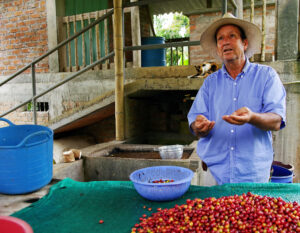
We had just toured the farm and saw where the “cherries” turn from green to red on the bushes as they ripen. Our guide led us to the area where the beans are dried in the sun and then readied for export. A roaster prepares the ones that stay in Colombia, then a grinder gets them ready for tastings like ours.
This kind of experience is not unique to Colombia. I’ve toured coffee farms throughout the Americas, including a large, famous producer in Costa Rica and a boutique operation in Panama, Finca la Milagrosa, where the roasting equipment was made from used junkyard parts like a washing machine cylinder and a steering wheel axle.
As with many items we take for granted now, coffee didn’t arrive in the Americas until after the Spanish and Portuguese set up trade routes and the Colombian Exchange started transforming the world’s eating and drinking habits. The New World contributed corn, potatoes, tomatoes, chili peppers and chocolate, while Africa contributed bananas, coconuts and coffee.
Since then, coffee plants have landed and thrived in every country with a suitable climate and soil. In general, the plants need temperate weather at altitudes between 2,000 and 6,500 feet, and the best Arabican varieties need some shade instead of full sun. The leading producers by volume crank out what goes into instant coffee and fast-food chain cups, with Brazil and Vietnam producing more than half of the world’s industrial-grade Robusta supply.
When it comes to quality Arabica coffee with terms like “fair trade,” “single origin” and “shade grown,” top coffee shops and home buyers look for quality, not quantity. The commercial and the artisanal can exist in the same country, true for the big production countries of Colombia, Indonesia and Ethiopia. However, many smaller operations command higher prices in specialty areas such as Hawai‘i, Jamaica and Panama — the latter producing the Geisha (or Gesha) variety that can retail for as much as $2,500 for a single pound.
Although the way we drink coffee ebbs and flows by the year, it’s by far the most popular beverage in the United States. According to the National Coffee Association, 66 percent of Americans drink the beverage every day, and many more have it at least once a week. That’s a higher percentage than the people who drink tap water, with consumption up by nearly 14 percent since January 2021. The most popular way to prepare coffee at home is with a drip machine, while the most popular way to order it out is a latte, according to the organization.
Drinking excessive caffeine certainly carries some health risks, but multiple studies have found positive effects of coffee consumption on a more moderate basis of a few cups daily. This habit is linked to a reduced risk of heart disease, type 2 diabetes and liver cancer. Research also links moderate coffee consumption to a longer life span.
For those interested in learning more about where their morning shot of caffeine comes from, most of the coffee-producing countries feature a few farms set up to accept tourists. They provide another revenue source for the farms, especially since the gift shops provide retail margins instead of wholesale ones. It’s also a good public relations move to have customers traipsing through if the company has its own brand. The visitors provide revenue throughout the year as well, unlike a seasonal agricultural product.
While the locations differ, coffee farm tours generally follow a similar itinerary. A guide takes visitors among the coffee plants and explains how the coffee beans grow and are harvested. Visitors then tour the production side, where the harvested beans are sorted and processed. There will be some type of roaster, either for large-scale production or just for local use. Then comes the highlight: tasting coffee that’s far fresher and more complex than what you can ever get from the ubiquitous chain taking over the world.
Places in the Americas where you can go on a coffee tour include Mexico, every country of Central America, Colombia, Ecuador, Peru, Brazil and Bolivia. The tours in the Americas are often more established and organized than those on other continents, and agritourism has been a positive force in some of these communities for decades. Some are easily reached from major cities such as Quito, Bogotá or Guatemala City, making them an easy excursion for visiting business travelers.
In Africa you can find formal coffee farm tours in Ethiopia, Tanzania, Kenya, Rwanda, Burundi and Malawi. While the exact origins of coffee are as murky as the beverage itself, scholars agree the plant originated in what is now Ethiopia, and the local people started cultivating and consuming the resulting beverage more than 1,000 years ago. It then spread to what is now Türkiye and the Middle East from there.
Serious coffee fans can go all-in with tours in Ethiopia lasting from three to eight days, moving around the coffee regions of Yirgacheffe and Sidama and staying in different areas. Often these multiday tours add on visits to important historic or cultural areas. In Kenya and Tanzania they may be tacked on to a safari trip.
In Asia it’s possible to join a coffee tour in parts of Indonesia, Vietnam, Laos, Thailand and Myanmar. Here coffee tours often show up as shore excursions for ocean liners landing in ports or on Mekong River cruises that then drive passengers into the highlands.
Some owners turned their coffee farm into the centerpiece of a whole hospitality operation, such as Hacienda Combia in Colombia, where I visited, offering a 10-station tour that includes basket weaving and wildlife explanations. Hotel guests can join the workers in the harvesting, bagging and roasting. Some coffee farms in the Americas have their own upscale hotel with a spa and fine restaurant, such as Argovia Finca Resort in Chiapas, Mexico, and Finca Rosa Blanca in Costa Rica.
For coffee lovers who would like to learn more about the origins of what they’re drinking, a farm tour somewhere like Java, Kona, Boquete or the Blue Mountains proves a memorable addition to a vacation.
Read This Next
Introducing
FX Excursions
FX Excursions offers the chance for once-in-a-lifetime experiences in destinations around the world.
#globility
Insta FeedDaily
Apr 26, 2024The Bishop’s Lodge’s Bunkhouse: A Rustic, Historic Getaway
Santa Fe, New Mexico, is a small town that’s big on historic landmarks, buildings, parks and Western lore. Many of its most fascinating structures also happen to be hotels, including Bishop’s Lodge, which extends the city’s specific charms from the streets into the public areas and private suites and rooms. While most of the properties within historic buildings are upscale, Bishop’s Lodge is now a member of Auberge Resorts Collection thanks to a painstaking restoration, luxury appointments, commitment to personal service and wide range of exclusive activities.
Sponsored Content
Tips to Plan a Destination Event Worth the Trip
It's time to shake things up and inject some serious excitement into your next gathering. Whether planning a corporate conference, black-tie gala or milestone celebration, choosing the right venue can make all the difference. City Winery shares some tips to make your next gathering a rockin' success.
Daily
Apr 26, 2024Book the Ultimate Summer Escape at Grand Hyatt Playa del Carmen
Plan your 2024 summer vacation to Mexico. Grand Hyatt Playa del Carmen offers travelers special experiences this summer, as well as an all-inclusive offer. Whether you’re traveling with friends, family, your significant other or solo, this resort has something for everyone.
Daily
Apr 26, 2024Jamaica Gears Up for Summer with New Hotels and Experiences
Just in time for summer, Jamaica is easier to enjoy than ever thanks to new hotels and excursions. This Caribbean island has never been more alive than this year, and this summer is to be its best one yet.
Sponsored Content
Exclusive Savings: Cruise Along the Danube River with Global Traveler
Exclusive Sailing with Global Traveler
Daily
Apr 25, 2024Former Massachusetts Glasses Factory Transforms into New Hotel
In the late 1800s, eyeglass manufacturer George Washington Wells became the founder and owner of the largest eyeglass company in the town by merging with several smaller lens manufacturers in Southbridge, Massachusetts. By the early 1900s, Wells was running the largest eyeglass manufacturing company in the world, owning several factories in Southbridge and occupying more than 80 acres on both sides of the Quinebaug River. It was called the American Optical Company, known locally in town as “AO.”
Hôtel Royal Unveils evian SPA, the First in Europe
Daily
Apr 25, 2024Fairfield by Marriott Phnom Penh Review
eFlyer Reviews
Apr 24, 2024Wolf by Vanderpump Opens at Harveys Lake Tahoe
Daily
Apr 24, 2024eFlyer News
Apr 24, 2024Lufthansa’s Allegris Takes Off May 1
Lufthansa’s new travel experience on long-haul routes starts its scheduled service May 1. Allegris is the airline’s new cabin, marking a new era for Lufthansa. Allegris sees updates and changes to economy, premium economy and business class, with a planned first-class cabin later this year.
Sponsored Content
Briggs & Riley: Elevate Your Journey with Quality Luggage
Embracing a life well lived often means embracing a life well-traveled. Every journey becomes a canvas for experiences that shape our lives and at the heart of every adventure lies the indispensable companion: quality luggage.
eFlyer News
Apr 24, 2024IHG Hotels & Resorts Introduces 12 New Properties to Vignette Collection in 2024
IHG Hotels & Resorts welcomes 12 new properties to its brand-new luxury and lifestyle brand, Vignette Collection. Vignette Collection is a curation of distinct, hand-picked hotels, each offering one-of-a-kind stays from beachfront resorts to boutique townhouses.
ShareThis