Abu Dhabi, home to generations of pearl divers, fishermen and small traders, once seemed fated to remain a sleepy backwater lost in a dream of old Araby. Then, abruptly, everything changed. In 1958, vast oil deposits were found beneath the desert sands. Four years later, Abu Dhabi began exporting petroleum and was quickly on its way to becoming one of the richest and most stable hubs for international business in the Middle East.
Oil is still the prime driver in the globalized emirate of 1.5 million people, 80 percent of them foreign-born immigrants and expatriates. Abu Dhabi produces nearly all the oil in the seven-member United Arab Emirates, the loose federation that borders Saudi Arabia and Oman. Often overshadowed by the flashy risk-takers in neighboring Dubai, Abu Dhabi plays the shrewd big brother to Dubai’s impulsive teenager. When Dubai shocked investors in November 2009 by postponing payment on some of state-owned Dubai World’s debt, Abu Dhabi poured $5 billion into Dubai’s coffers, on top of the $10 billion it had committed earlier in the global recession.
Abu Dhabi, capital of the United Arab Emirates and its largest member, has tapped its pipeline of petrodollars to build a glittering, high-rise skyline on the arid shores of the Persian Gulf (known locally as the Arabian Gulf). Banking, aviation, real estate, construction and high-profile arts and culture projects designed to lure the world’s tourists have helped to diversify the economy.
A boomtown even in the downturn, Abu Dhabi bristles with tall, yellow construction cranes. It is building a Frank Gehry-designed branch of the Guggenheim Museum and a branch of the Louvre on Saadiyat Island, just off Abu Dhabi Island, the city’s traditional center. The multi-billion dollar Saadyat Island project, which will open in stages, is scheduled to be completed in 2018. Abu Dhabi International Airport (AUH), which opened a state-of-the-art third terminal in 2009, plans to increase capacity to 20 million passengers per year by 2012, from 12 million. The U.A.E.’s 6-year-old national flag carrier, Etihad Airways, is one of the fastest-growing airlines ever, flying to nearly 60 destinations and earmarking $43 billion at list prices to buy aircraft. All told, Abu Dhabi has launched or announced $200 billion worth of development.
This spasm of activity has come at a cost that goes beyond price tags. Abu Dhabi has bulldozed much of its heritage. It has belatedly preserved pockets of history and traditional culture and built tourist-friendly reproductions. At the Heritage Village (Breakwater, near Marina Mall, tel 971 2 681 4455), artisans demonstrate crafts such as pottery and weaving, and visitors can duck into a camel-hair tent to glimpse a traditional Bedouin dwelling. Throughout the city, 24/7 construction has befouled the air, already subject to sandstorms. Fast-forward development has also generated traffic jams and given the city center a permanent sense of impermanence.
Despite its sheen of modernity, Abu Dhabi remains a conservative Arabian Muslim society. Most local women wear head scarves and dress modestly, although head-to-toe burqas are not common outside religious sites, and standards for expat women and female travelers are more relaxed. In keeping with Islam’s strictures on alcohol, Abu Dhabi hasn’t a single free-standing bar or Western-style liquor store. But, again, there are exceptions: Licensed restaurants and bars in foreign-owned hotels serve alcohol to hotel guests, as do some members-only nightclubs, which sell memberships at the door.
This may make Abu Dhabi sound austere. But while it deliberately eschews Dubai’s Vegas-like grandiosity — much of the time, anyway — Abu Dhabi is an engaging destination. It is efficient, generally free of crime and increasingly outward-looking. The large expatriate community — which outnumbers Emiratis 4 to 1 — gives this once-insular place a cosmopolitan quality. This shows most obviously in shopping. Major fashion designers and global retail brands are found in the larger malls, especially the two most-well-known: Marina Mall (off 18th Street, tel 971 2 681 8300) and Abu Dhabi Mall (near the Beach Rotana Hotel, Al Mina, tel 971 2 645 4858). It is also evident in a wide range of cuisine. Traditional meat-heavy Arabian fare is popular, as is Lebanese food with its delectable honey and nut sweets. High-end restaurants, tucked away in 4- and 5-star international hotels, feature Italian, French, American and Mexican cuisine. Indian food is very popular, especially among expats and visitors.
Global “starchitects” such as America’s Gehry, Britain’s Sir Norman Foster and Japan’s Tadeo Ando will leave their mark on Abu Dhabi, though some of the city’s recent work hews closely to vintage Islamic architecture. A must-see for its sheer excess is the $3 billion Emirates Palace Hotel, a 2005 look-at-me landmark; the hotel encompasses the admission-free Gallery One, which exhibits works by local and world-famous artists, and a café that serves cappuccinos flecked with edible gold. Another new landmark is the 2007 Grand Mosque (Al Madina Al Riyadiya, tel 971 800 2274 8252). The enormous white and gold palace topped with slender minarets can accommodate up to 40,000 people; free tours in English take place every day except Friday, the Muslim holy day. The gleaming exterior of the mosque is on dramatic view, across the water, from the Souk Qaryat Al Beri (Between the Bridges, tel 971 2 509 888), a just-finished version of a traditional souk, which can be toured by boat on purpose-built canals. One remnant of old Abu Dhabi that is worth visiting is the Fish Market (Mina Zayed Free Port), a decidedly unglamorous wet market in a worn waterside building, where aromatic heaps of freshly caught fish are hauled in for sale.
Getting around, especially on foot, can be a challenge. Construction and climate conspire to make walking difficult, though there are beguiling exceptions — notably the pretty Corniche promenade along the shore of the Arabian Gulf, a handful of public beaches and compact traditional souks which specialize in handicrafts such as rugs and gold jewelry, where prices are always negotiable. Most signs are helpfully bilingual, in Arabic and English. You may want to linger in the air-conditioning, as high humidity and searing heat that soars past 120 degrees in summer make outdoor activities feel like a steam bath. The best time to visit is winter, when temperatures rarely top 80.
Abu Dhabi’s ambitious projects have not yet included a subway. Local bus routes, while efficient, can be tough to decipher. Taxis are the best way to get around; new, air-conditioned cabs with silver livery and yellow signs offer metered fares. If you have some time to see the emirate’s rugged interior, renting a car at the airport is the way to go. Smooth, well-maintained highways open up inland attractions such as Al Ain — an oasis town 90 minutes from Abu Dhabi city — which is festooned with vintage fortresses and backs up against arid mountains and the Oman border in a dream-of-Arabia setting.
Info to Go
The best way to transfer between Abu Dhabi city and Abu Dhabi International Airport (AUH) is by taxi. There is no train or metro. The 22-mile ride takes 30–40 minutes and costs about $18. Ask if your hotel has a free shuttle service. Visit www.visitabudhabi.ae.
Diversions
A popular pastime is “dune-bashing,” booked through tour companies such as Arabian Adventures (tel 971 2 691 1711, www.arabian-adventures.com). Wheels churning, sand flying, 4-wheel-drive vehicles (driven by guides) take runs up sand dunes a thousand feet high, straddle the knife-edge tops, then slide down the side before gearing up to climb another dune.
Dune-bashing is typically combined with a visit to a camel farm; camels, once the main mode of Bedouin transportation, are now raised chiefly for racing. The excursion includes a view of a desert sunset and a brief camel ride, followed by a savory outdoor barbeque capped by puffs on a shisha, the time-honored water pipe filled with sweet-smelling, fruit-flavored tobacco.
Lodging
Emirates Palace
The self-proclaimed world’s first 7-star hotel; no pampering is too much in this national signature building. Corniche Road W., tel 971 2 690 9000, $$$$
Shangri-La Hotel, Qaryat Al Beri
This waterside retreat expertly combines resort amenities, gorgeous guestrooms and a full-service business center. Between the Bridges, tel 971 2 509 8888, $$$$
Sheraton Khalidiya Hotel
Its downtown location and U.S. brand make the hotel a popular choice for visiting executives, especially Americans. Sheikh Zayed the First St., tel 971 2 666 6220, $$$
Dining
Al Dhafra
This is a good option for a dinner cruise on an air-conditioned boat, gliding by the city skyline on calm Gulf waters. Near Al Mina Fish Market, tel 971 2 673 2266, $$–$$$
Indigo
A stylish fusion restaurant, Indigo combines eye-pleasing contemporary design with a modern take on Indian and other Asian dishes. Beach Rotana Hotel and Towers, Tourist Club Area, tel 971 2 697 9334 $$$–$$$$
Shang Palace
If you tire of Middle Eastern food, this elegant Cantonese restaurant has everything from good dim sum to toothsome banquet fare. Shangri-La Hotel, Between the Bridges, tel 971 2 509 8888, $$$$
Read This Next
All Reads on This Topic
Read Them All
Introducing
FX Excursions
FX Excursions offers the chance for once-in-a-lifetime experiences in destinations around the world.
#globility
Insta FeedMelt into Mediterranean Charm in Barcelona and Costa Brava
Usually regarded for its Modernist architecture, centuries of artistic influence and polarizing football team, Barcelona has come into its own as a growing tech hub. The capital of Catalonia hosts the annual Mobile World Congress each March, and its Poble Nou neighborhood cradles some of the world’s most recognizable startups like TravelPerk and Typeform.
Sponsored Content
What Actually Happens If You Get Sick or Hurt on a Cruise?
You’ve booked your cabin, mapped the ports and packed the sunscreen. Hopefully, you also bought some insurance. But have you ever thought about what actually happens if a medical emergency strikes mid-voyage?
Daily
Sep 21, 2026Ireland’s Dromoland Castle Announces Landmark Transformation
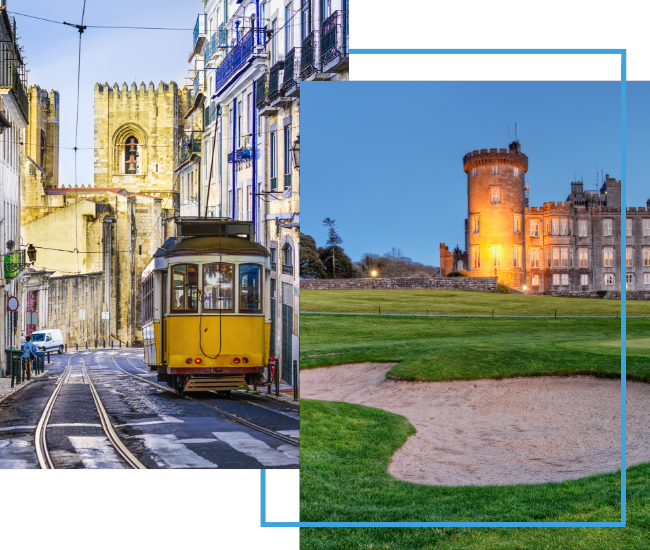
This November, Dromoland Castle is set to close its doors for six months for its largest redevelopment in its 63 years as a hotel. Set to reopen in June 2027, the 16th-century property in County Clare will debut a one-of-a-kind transformation with updates to accommodations, public spaces, wellness facilities, culinary features and more.
Destinations
Sep 21, 20266 Reasons to Put Addis Ababa, Ethiopia, on Your Travel List
It’s time to start dreaming of your next trip. Here’s some destination inspiration for you. Take a visual journey through Addis Ababa, Ethiopia, with us.
Sponsored Content
IHG Business Edge: A Smarter Way for Small- and Mid-Sized Businesses to Travel
IHG Business Edge is a complimentary travel program designed to help small- and mid-sized businesses manage travel more efficiently while saving on hotel stays. Members enjoy access to guaranteed discounts, loyalty benefits, and partner offers across IHG Hotels & Resorts’ global portfolio of 7,000-plus hotels in more than 100 countries.
Daily
Sep 21, 2026Women’s Retreats Now Available at Six Senses Kyoto, Six Senses Kanuhura
Designed to be a supportive experience for women of all ages, The Yin Way Retreat — The Way of a Woman is a new experience available to guests this year at Six Senses Kanuhura in the Maldives. It’s available Oct. 1 to 4 in the Maldives, and at Six Senses Kyoto in Japan Dec. 11 to 14.
Seven Seas Prestige to Feature New Spaces
September 2026
Sep 19, 2026Daily
Sep 18, 2026Windstar Unlocks Tower of London After Dark and Other New 2027 Experiences
Explore three different remarkable European destinations in 2027 with Windstar Cruises. The brand’s newest 224-guest, all-suite yacht, Star Explorer, debuts alongside complimentary Destination Discovery Events in Livorno, Dubrovnik and London.
Sponsored Content
Get to Know TAP FORBIZ
Unlock flexible, refined business travel with TAP Air Portugal's program, TAP FORBIZ. Developed for small, medium and large Companies, with options for corporate events, TAP FORBIZ offers exclusive advantages adapted to each type of business. TAP FORBIZ offers solutions suited to each business: travel cost reduction, more flexibility, more benefits and more value. With TAP FORBIZ, businesses can centralize purchases, control the company budget and ensure greater cost predictability with exclusive discounts and benefits tailored to each company's profile. Each trip becomes a strategic decision to travel more and spend less.
September 2026
Sep 17, 2026High-Spirited Hong Kong: The Dynamic Hub Embraces Its Maritime History and Culture
It was known as the “Kai Tak heart attack” — the thrilling, terrifying final approach into Hong Kong’s Kai Tak Airport. Airliners were required to bank sharply at the last moment, dodging hills and apartment blocks to line up with a runway jutting out into Kowloon Bay. The airport is long gone, but international visitors are arriving at Kai Tak again, albeit more sedately. Their cruise ships dock smoothly at Kai Tak Cruise Terminal, a modern gateway designed by Sir Norman Foster.
ShareThis